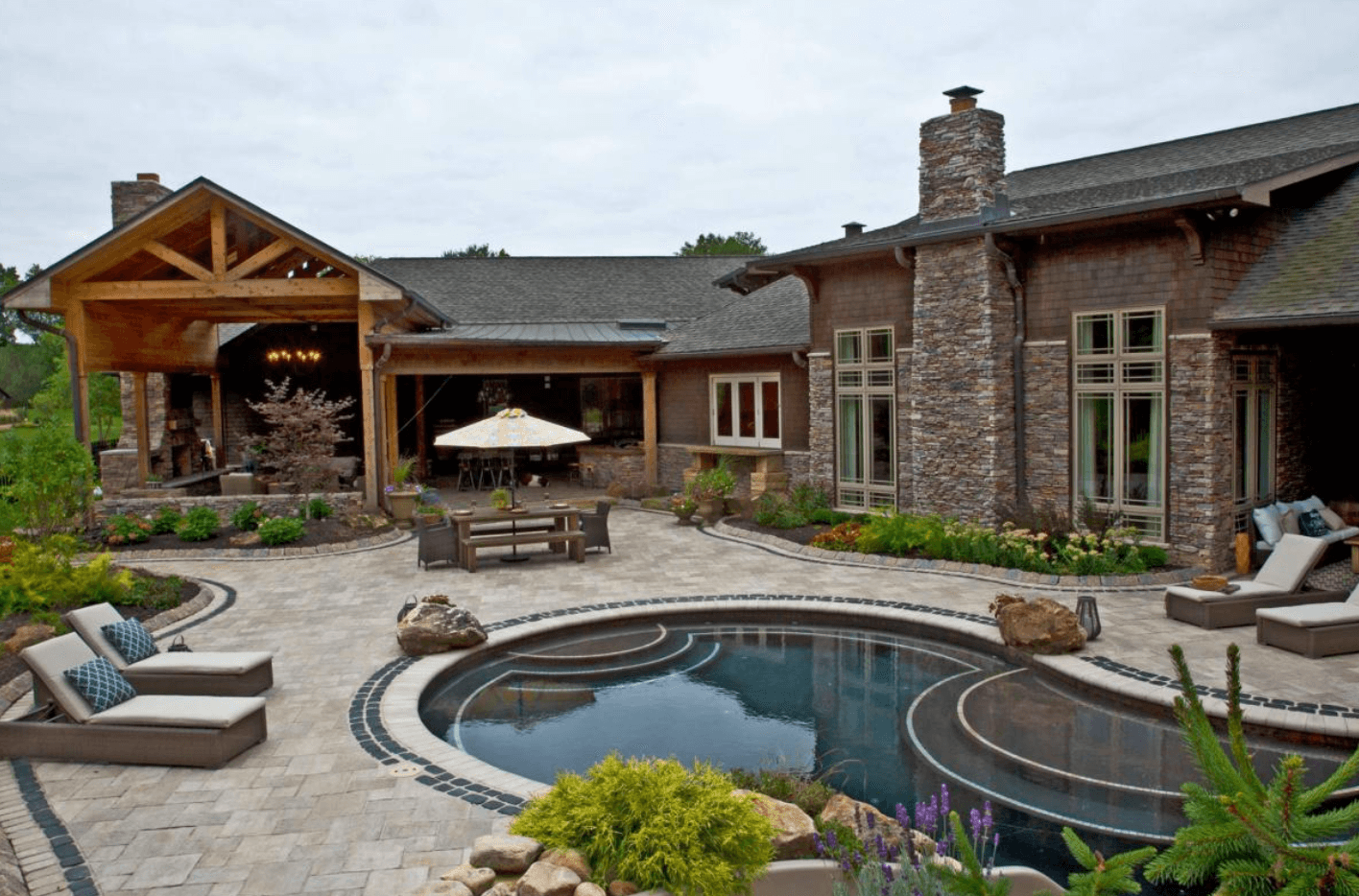
Eco-friendly landscaping is an approach to designing outdoor spaces to reduce waste, chemical use and maintenance. It can combine native plants with smart irrigation and sustainable hardscaping to create landscapes that thrive naturally. Since 1998, Country Gardens has been designing custom eco-friendly landscapes for homeowners who want both beauty and sustainability.
Key takeaways:
Cut maintenance time with native plant selections.
Reduce watering costs using drought-tolerant landscaping designs.
Transform clay soil into a thriving luxury landscape.
Smart, Sustainable Landscaping Ideas
Creating an environmentally friendly landscape starts with strategic choices that work with your property’s natural conditions rather than against them.
Select Native Plants in Indianapolis
Regionally adapted species can help your landscape handle Central Indiana’s clay soil, seasonal temperature swings and summer dry spells with less intervention. Consider these low-maintenance native plants:
Purple coneflower and black-eyed Susan: These perennials have deep root systems that break up dense clay soil and naturally resist local pests while supporting butterflies and bees that keep your landscape thriving.
Butterfly weed: This species tolerates extended dry periods without additional watering. It self-seeds gradually to fill bare spots and attracts monarch butterflies and other pollinators throughout the growing season.
Oak sedge: This groundcover acts as a low-growing alternative to thirsty grass. Once established, it stays green through summer heat with minimal watering.
Install Smart Irrigation Systems
Water-efficient landscaping helps reduce waste during summer drought patterns by automating decisions you’d otherwise make manually. Smart irrigation controllers use real-time weather data to automatically adjust watering schedules, skipping cycles before storms and increasing coverage during heat waves.
Meanwhile, drip irrigation maximizes water efficiency by delivering water directly to plant roots rather than spraying it across your yard. This targeted approach reduces runoff while encouraging stronger roots. You use less water overall and spend less time managing your system.
Build Rain Gardens for Clay Soils
Heavy clay soils are common across the region, creating persistent pooling and drainage challenges that damage foundations and drown plants. Rain garden landscaping solves this problem by capturing runoff and filtering it before it reaches storm drains or your home’s foundation.
Here’s how rain gardens work:
Shallow depressions collect rainwater from downspouts, driveways and slopes during storms.
Native plants and amended soil remove pollutants as water slowly percolates through the garden.
Water drains within 24 to 48 hours, preventing foundation damage and eliminating the standing water that traditional drainage systems can’t handle.
This approach eliminates the need for expensive artificial drainage systems or harsh chemicals while protecting your property investment.
Upgrade to Permeable Hardscaping and Pavers
Sustainability and luxury outdoor living aren’t competing priorities. Permeable pavers for patios and walkways reduce runoff and erosion while maintaining the polished, elevated aesthetic your property deserves.
Unlike traditional pavers, permeable options allow rainwater to seep through joints and reach the soil below. This prevents pooling on surfaces and minimizes strain on storm systems. You get a stunning space that performs well, even during heavy weather.
Sustainable Landscaping FAQ
Homeowners exploring eco-friendly landscaping often have similar questions about costs, plant choices and long-term maintenance.
How much does eco-friendly landscaping cost?
Eco-friendly installations vary by project. Professional rain gardens average $4 to $30 per square foot, while permeable paver patios average $10 to $30 per square foot installed. While full-yard transformations require an up-front investment, replacing traditional turf with native and sustainable solutions can reduce long-term utility bills and maintenance costs.
How do you decorate an eco-friendly yard?
Start with stone patios and custom fire features as your anchors. Surround them with native plantings that complement your home’s style. Natural stone materials blend well with native perennials and grasses to create a space that looks intentional rather than purely functional.
What are the best low-maintenance native plants?
Choose hardy perennials that thrive in Zone 6a/6b. Little bluestem provides four-season interest, switchgrass handles both wet and dry conditions, and wild geranium thrives in partial shade while spreading gradually. These perennials require minimal intervention once mature.
How does clay soil affect sustainable landscaping?
Clay soil drains slowly and compacts easily, creating challenges for both plants and water management. Deep-rooted native plants naturally break up compacted clay over time while improving drainage. Amending planting areas with organic matter helps, but selecting plants already adapted to clay conditions eliminates the need for constant soil amendments.
Do rain gardens attract summer mosquitoes?
Properly designed rain gardens drain within 24 hours, preventing the standing water mosquitoes need to breed. Because some mosquitoes can develop from egg to adult in as little as seven to 10 days, fast drainage helps keep rain gardens from becoming breeding sites.
Design Your Eco-Friendly Indianapolis Yard
You can do the right thing for the environment without sacrificing the beauty or luxury of your outdoor space. Our design-build team at Country Gardens handles everything from the initial concept to the final installation. Contact us to request your custom quote and let us transform your property in Zionsville, Carmel or Westfield.