

Search


Planning a patio, pool, or fire feature in Indianapolis takes more than just picking a style you like. Site conditions, drainage, permits, and safety codes shape what’s possible on your property. Knowing these details upfront helps you avoid costly surprises and keeps your project on track. With the right guidance, your outdoor living spaces can blend beauty, function, and sustainability seamlessly. Let’s explore what every homeowner should consider before starting their backyard renovation Indianapolis.
Before diving into design ideas, it’s crucial to understand the foundational aspects that will shape your outdoor project.
Your property’s layout dictates what’s feasible. Start by examining the terrain: is it flat or sloped? A steep slope may require terracing for a patio or specialty pool design. Soil type matters too; clay-heavy soils can affect stability and drainage. Consider existing trees or structures that might need removal or protection. By understanding these elements, you ensure a solid foundation for your project.
Without proper drainage, your dream patio could turn into a puddle-filled nightmare. Assess where water collects during rainstorms. Installing French drains or grading the land can help manage runoff. Consider permeable pavers for patios to allow water absorption, reducing puddling. Proper drainage not only protects your new features but also maintains the health of your entire yard.
Before breaking ground, check with local authorities and your homeowners association (HOA). Permits are often needed for structural additions like pools or fire features. HOAs may have rules on materials or colors. By understanding these requirements early, you avoid potential fines or the hassle of redesigning to meet regulations. Always have approval in hand before starting construction.
With foundational elements in place, the next step is selecting designs and materials that align with your vision and local regulations.
Safety should be at the forefront of any outdoor project. Local codes dictate pool fencing and fire feature placement to ensure the safety of everyone, especially children. Compliance isn’t just about avoiding fines; it’s about creating a space where family and friends can relax without worry. Adhering to these codes protects your investment and gives you peace of mind.
Opting for sustainable materials is both eco-friendly and cost-effective in the long run. Native plants conserve water and thrive with minimal care. Permeable pavers help with drainage and reduce runoff. Using recycled materials can add unique character to your space while supporting sustainability. These choices help create a beautiful area with a lower environmental impact.
A clear budget and timeline prevent stress and ensure smooth progress. Start by listing all desired features like a paver patio or outdoor kitchen design. Get multiple estimates and factor in potential extras like permits or unforeseen site work. Establish a realistic timeline that accommodates weather delays and material shipments. Proper planning enables you to focus on enjoying your new space rather than worrying about costs or delays.
Once the groundwork is laid, it’s time to bring your vision to life with custom features that enhance your outdoor experience.
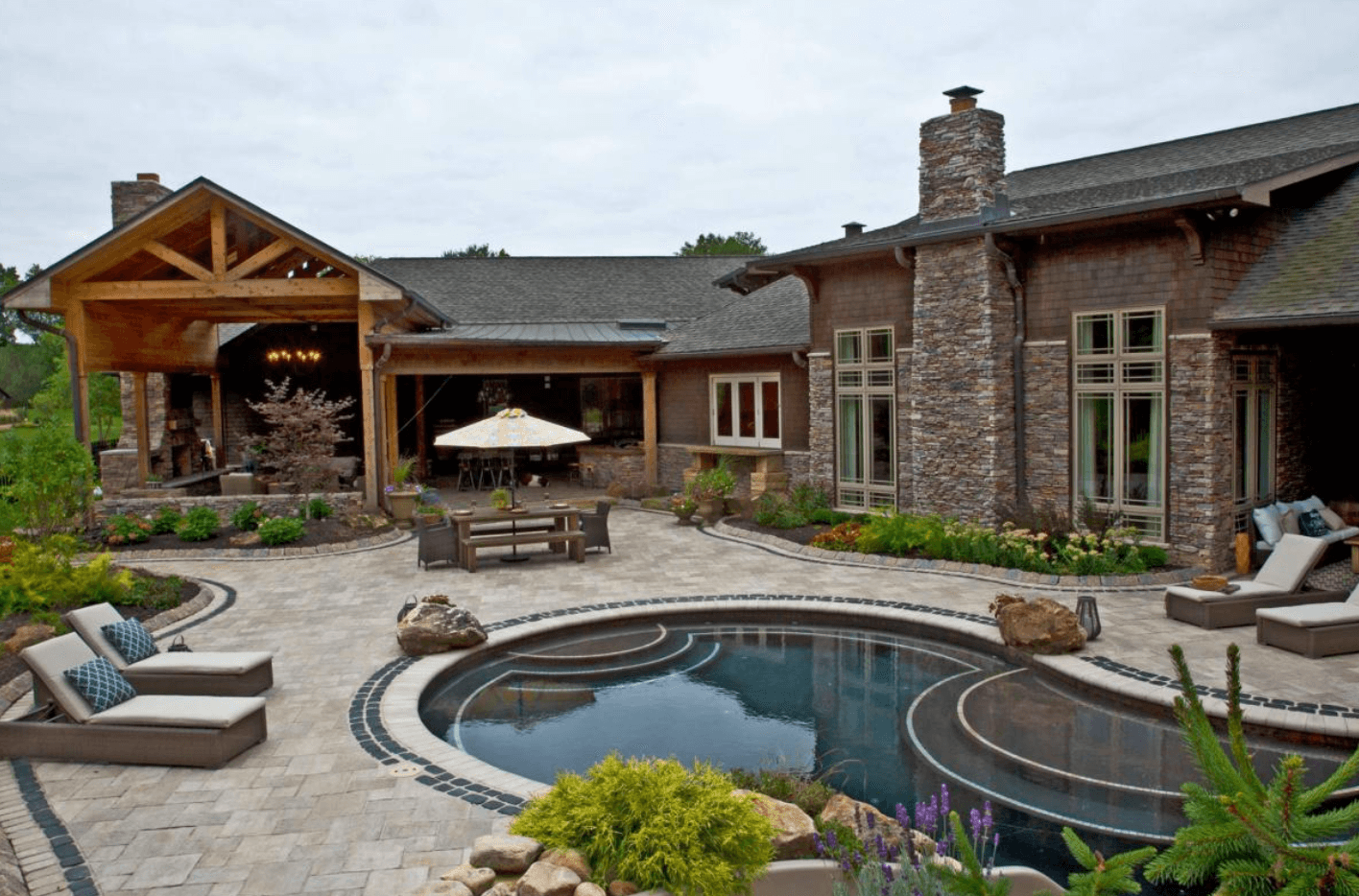
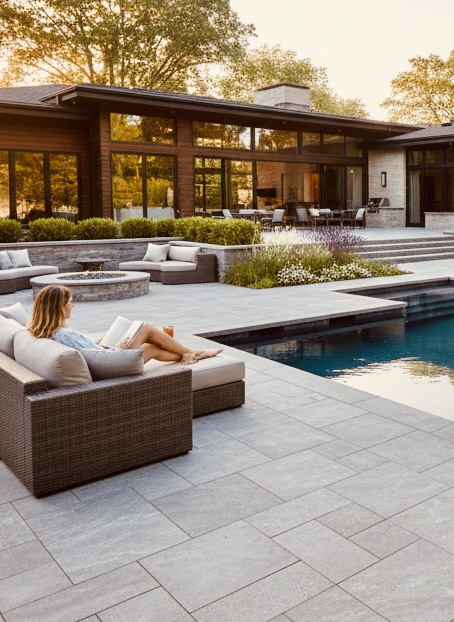
A well-designed patio becomes a natural extension of your home. Choose materials that complement existing structures: natural stone patio offers timeless appeal, while modern tiles add a sleek touch. Walkways lead guests seamlessly through your garden, guiding them to areas like cozy seating nooks or vibrant flower beds. With thoughtful design, your patio becomes a hub for relaxation and entertaining.
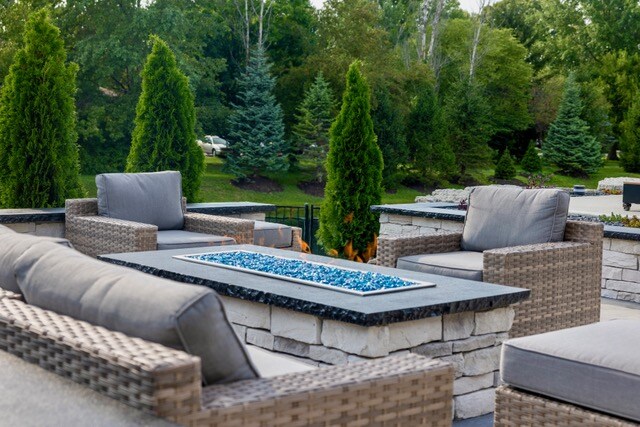
Pools offer a refreshing escape, while fire features provide warmth on cooler nights. When planning, consider the layout: a pool should blend into the landscape, perhaps surrounded by lush greenery for privacy. Fire pits can be central gathering points, drawing people together for stories and s’mores. Integrating these features creates an inviting atmosphere for year-round enjoyment.
An outdoor kitchen transforms meal prep into a social event. Start with essentials like a grill and counter space. Additions like a fridge or pizza oven enhance functionality. Consider proximity to the dining area for convenience. An outdoor kitchen not only elevates your entertaining but also increases your home’s value, making it a worthy investment.
What site conditions should I consider for a new pool?
Consider the terrain and soil type on your property. You’ll need to assess whether the area is flat or sloped, as well as the type of soil, since clay-heavy soils can affect stability and drainage.
How do I ensure my new patio won’t flood?
Install drainage solutions like French drains and consider using permeable pavers. Grading the land properly will also help manage water runoff and prevent flooding.
Do I need approval from my HOA before starting my project?
Yes, check with your local HOA for specific rules on materials and colors for your project. Permits are often required for structural additions, so obtaining approval beforehand is crucial.